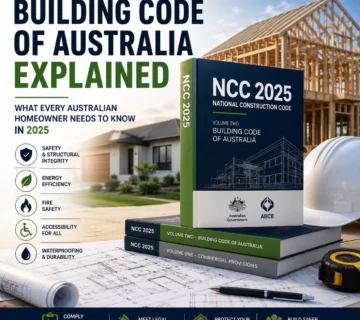
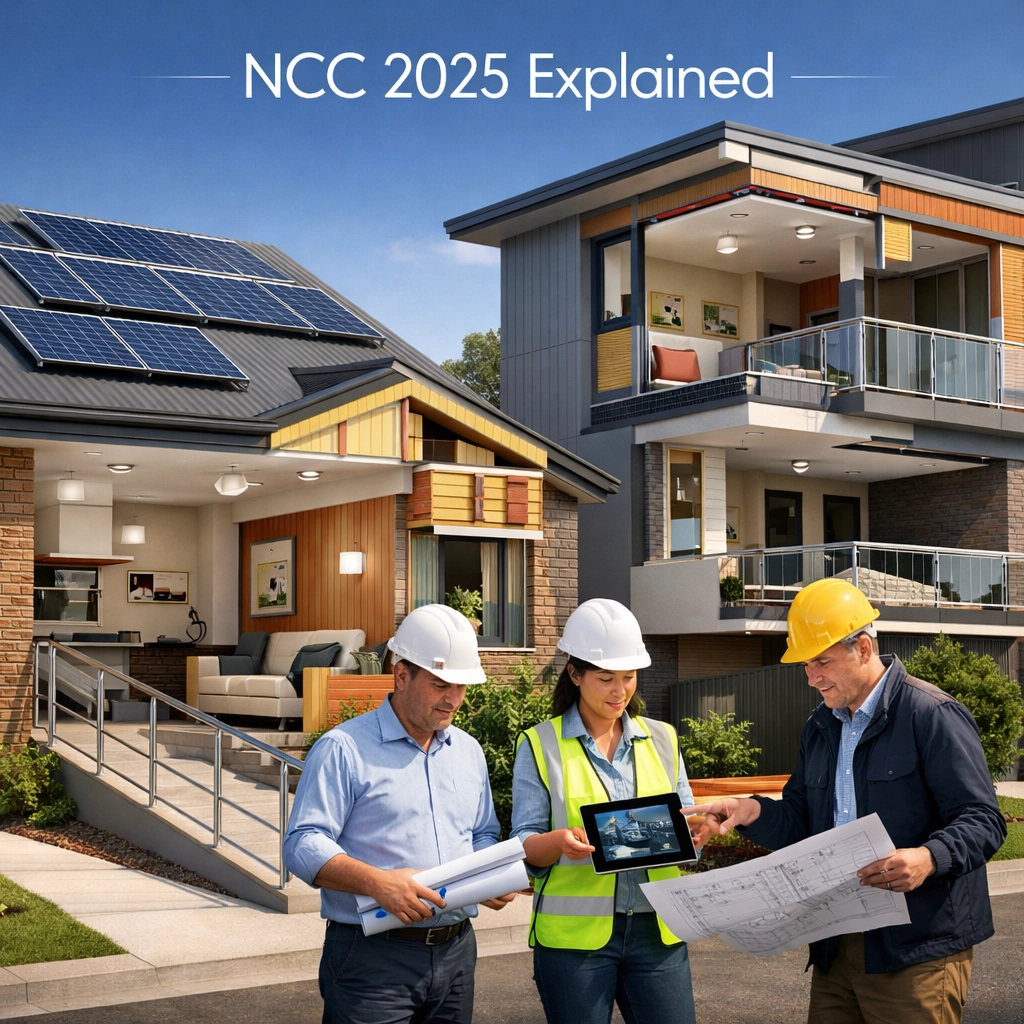
The upcoming NCC 2025 (National Construction Code 2025) is set to introduce significant updates that will reshape how residential buildings in Australia are designed, approved, and constructed.
For homeowners, developers, and investors, understanding these changes is essential—not just for compliance, but for making smarter, future-proof decisions.
In this guide, we break down the key changes in the Building Code of Australia 2025, how they affect residential construction, and what they mean for approvals such as DA and CDC in NSW.
What Is NCC 2025?
The National Construction Code 2025 (NCC 2025) is Australia’s primary set of technical building standards, incorporating the Building Code of Australia (BCA).
It governs all aspects of construction, including:
Structural integrity
Fire safety
Energy efficiency
Health and amenity
Accessibility
For residential projects, NCC applies to:
Class 1 buildings (houses, townhouses)
Class 2 buildings (apartments)
Class 10 structures (garages, sheds)
Why NCC 2025 Matters for Residential Buildings
The new NCC update is not just a minor revision—it represents a shift toward:
✔️ Higher energy efficiency standards
✔️ Electrification and sustainability
✔️ Improved health and indoor comfort
✔️ Stronger compliance and verification
For anyone planning home renovations, new builds, or CDC projects, these changes will directly impact:
Design decisions
Approval pathways
Construction costs
Long-term property value
Key Changes in NCC 2025 for Residential Buildings
1. Stricter Energy Efficiency and Electrification
Energy performance is one of the most significant areas of change in Building Code of Australia 2025.
Key updates include:
Higher thermal performance requirements
Improved insulation standards
Better glazing performance (lower U-values)
Increased building sealing to reduce air leakage
Switchboard upgrades to support electrification
EV Charging Readiness
New residential developments may require:
Pre-installed electrical capacity for EV chargers
Future-ready infrastructure
📌 This aligns with Australia’s transition toward net-zero housing by 2050.
2. Push Toward Net-Zero and Renewable Energy
NCC 2025 continues the transition introduced in previous versions by:
Encouraging rooftop solar integration
Supporting battery-ready systems
Reducing reliance on gas appliances
Homes will increasingly need to be:
Energy efficient
Electrification-ready
Environmentally sustainable
3. Condensation Management and Moisture Control
Moisture-related issues have become a major concern in modern airtight homes.
NCC 2025 introduces:
More prescriptive vapour control layers
Improved wall and roof ventilation
Better drainage systems in wall cavities
Requirements to prevent mould and condensation
📌 This is critical for:
Indoor air quality
Long-term building durability
4. Waterproofing and Drainage Enhancements
Water ingress is one of the most common causes of building defects in Australia.
Updates include:
Stricter detailing for balconies and flat roofs
Improved drainage requirements
Better integration of waterproofing systems
Tighter construction tolerances
This affects:
Extensions
Multi-level homes
Outdoor living areas
5. Fire Safety Improvements
Fire safety provisions are becoming more rigorous under NCC 2025.
Key updates:
Stricter requirements for car parks (especially with EV risks)
Increased fire resistance levels (FRL)
Reduced exemptions for open structures
Improved exit signage and evacuation requirements
📌 Performance solutions will require stronger evidence, not just expert opinion.
6. Accessibility and Livable Housing Standards
NCC 2025 continues implementing Livable Housing Design (Silver Level) requirements.
New residential buildings may require:
Step-free entry
Wider doorways and corridors
Accessible bathrooms
Reinforced walls for grab rails
This ensures homes are:
Future-proof
Suitable for all ages and mobility levels
7. Stronger Compliance and Verification Requirements
One of the biggest shifts in NCC 2025 is how compliance is assessed.
Changes include:
Reduced reliance on subjective expert judgment
More defined testing and verification methods
Increased documentation requirements
This directly impacts:
DA applications
CDC approvals
Certification processes
How NCC 2025 Affects DA and CDC Approvals in NSW
For projects in NSW, the impact of BCA compliance NSW under NCC 2025 is significant.
For DA (Development Applications):
Councils may require more detailed documentation
Energy and compliance reports will be stricter
Design must consider updated standards early
For CDC Renovations:
Fast-track approvals still require full compliance
BASIX + NCC alignment becomes more critical
Non-compliant designs will be rejected quickly
📌 In short:
You cannot bypass NCC 2025 requirements—even with CDC.
What This Means for Homeowners and Developers
Expect:
✔️ Slightly higher upfront construction costs
✔️ Better long-term energy savings
✔️ Improved comfort and indoor health
✔️ Higher property value
Risks if Ignored:
❌ Delayed approvals
❌ Costly redesigns
❌ Compliance issues
❌ Failed certification
Common Mistakes to Avoid
Designing without considering NCC 2025
Underestimating energy requirements
Ignoring condensation and ventilation rules
Using outdated plans
Skipping professional planning advice
Why Professional Planning Advice Is Essential
With increasing complexity in National Construction Code 2025, navigating approvals without expert guidance is risky.
At Residential Plannings, we help homeowners and developers:
✔️ Achieve full BCA compliance NSW
✔️ Prepare DA & CDC applications
✔️ Optimise designs for approval
✔️ Avoid costly delays and redesigns
✔️ Coordinate with councils and certifiers
We specialise in residential planning across Sydney and NSW, ensuring your project meets all NCC 2025 requirements from day one.
🔗 Visit: https://residentialplannings.com.au/
Final Thoughts: Is Your Project Ready for NCC 2025?
The Building Code of Australia 2025 is raising the standard for residential construction across the country.
Whether you’re planning:
A new home
A renovation
A CDC project
Understanding and applying NCC 2025 early will save you time, money, and stress.
FAQ (SEO Optimised)
❓ What is NCC 2025?
NCC 2025 is the latest version of the National Construction Code, setting updated building standards for safety, energy efficiency, and sustainability in Australia.
❓ Does NCC 2025 apply to residential buildings?
Yes. It applies to all residential buildings, including houses (Class 1) and apartments (Class 2).
❓ Will NCC 2025 affect renovation projects?
Yes. Any new work must comply with NCC 2025, even if the existing house was built under older codes.
❓ Are CDC renovations affected by NCC 2025?
Yes. All CDC renovations must fully comply with the current NCC requirements at the time of approval.
❓ What is the biggest change in NCC 2025?
The biggest changes include stricter energy efficiency, electrification readiness, and stronger compliance verification requirements.