Australia has some of the highest building standards in the world, ensuring homes are safe, energy efficient, durable, and accessible. Whether you are planning to build a new house, renovate your existing property, construct a granny flat, or add an extension, understanding the Building Code of Australia (BCA) is essential.
Many homeowners only discover building code requirements after their project has already started, leading to delays, redesign costs, and approval issues. By understanding the Building Code before construction begins, you can avoid unnecessary expenses and ensure your project complies with Australian regulations.
This guide explains what the Building Code of Australia is, why it matters, and how it affects residential developments in 2025.
What Is the Building Code of Australia?
The Building Code of Australia (BCA) forms part of Australia’s National Construction Code (NCC) and establishes the minimum technical standards for building design and construction throughout the country.
The code covers a wide range of requirements including:
- Structural safety
- Fire protection
- Health and amenity
- Waterproofing
- Energy efficiency
- Accessibility
- Building services
- Sustainability requirements
Its purpose is to ensure that buildings are safe, functional, and suitable for long-term occupation.
Is the Building Code the Same as the NCC?
This is one of the most common questions asked by homeowners.
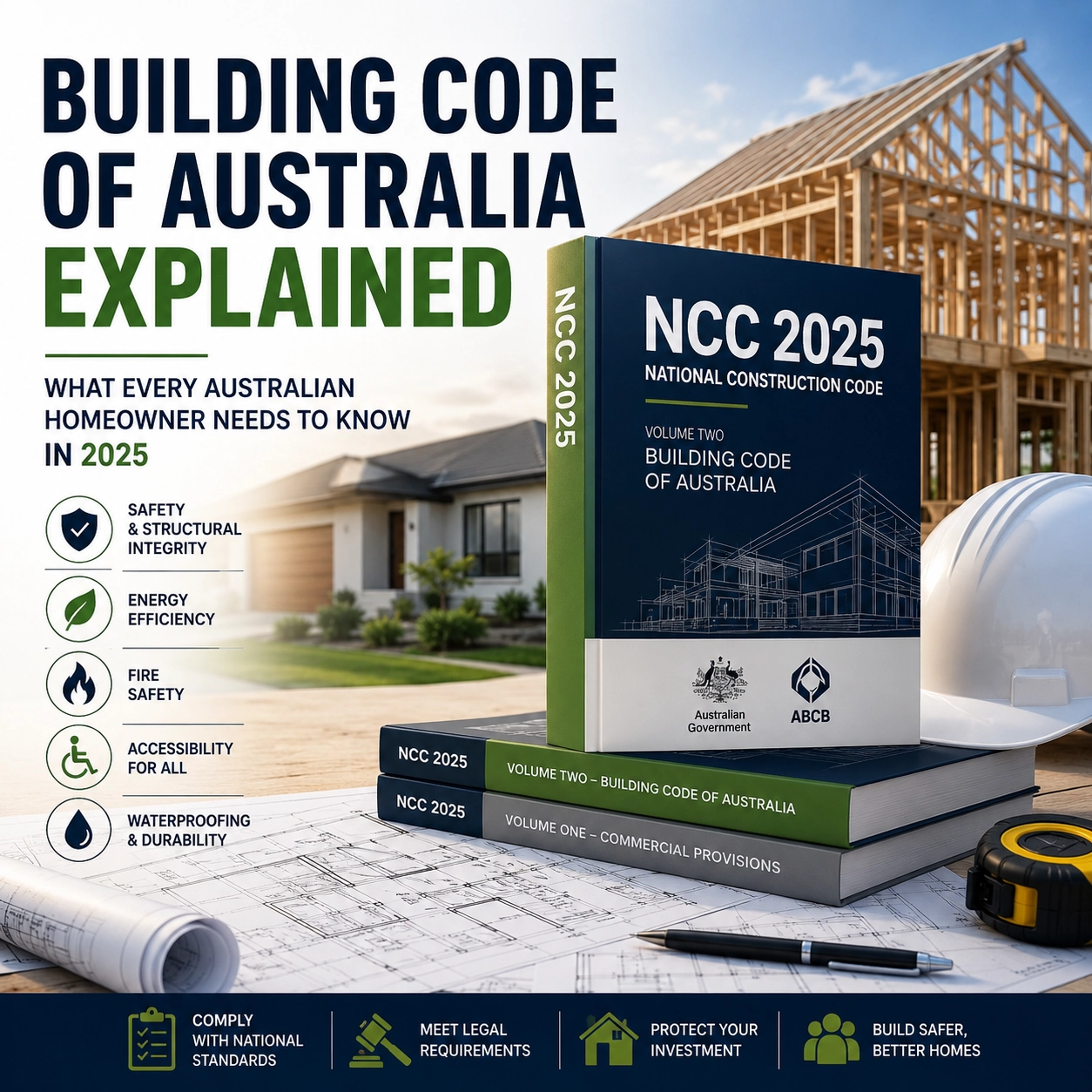
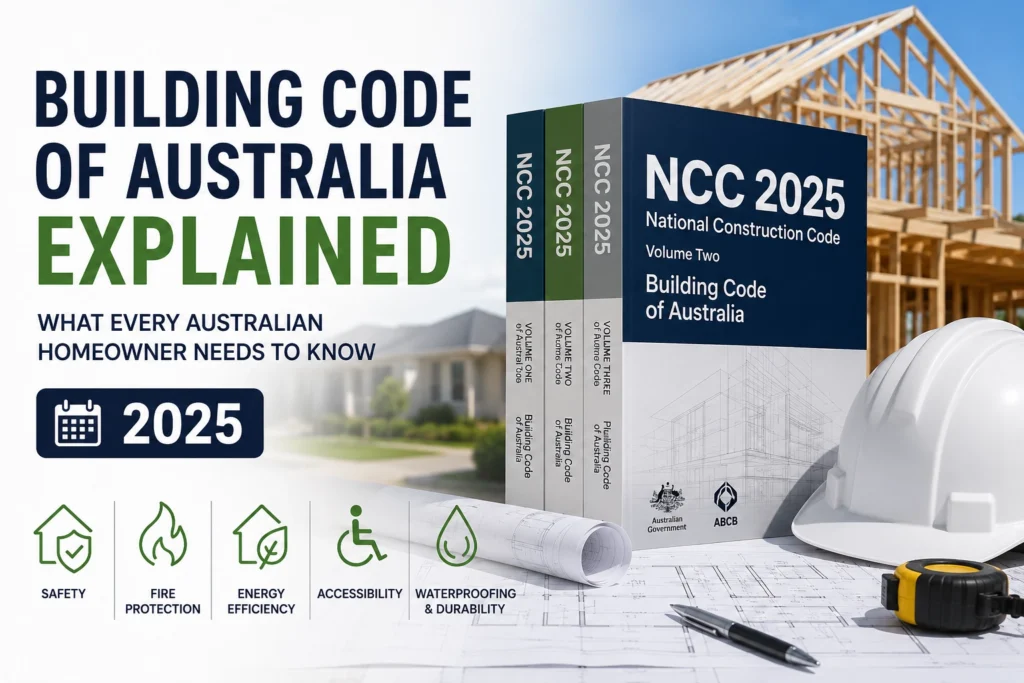
The National Construction Code (NCC) consists of three volumes:
- Volume One – Commercial Buildings
- Volume Two – Residential Buildings (formerly known as the Building Code of Australia)
- Volume Three – Plumbing Code of Australia
Although many professionals still use the term Building Code of Australia, today it generally refers to the building provisions contained within the NCC.
Why Is the Building Code Important?
The Building Code protects homeowners by ensuring that buildings meet nationally accepted performance standards.
Compliance helps ensure:
- Safe structural design
- Protection from fire hazards
- Better indoor comfort
- Reduced moisture and condensation problems
- Improved energy efficiency
- Lower long-term maintenance costs
- Higher property value
Ignoring these requirements can result in failed inspections, costly rectification work, and delays in obtaining occupation certificates.
Which Residential Projects Must Comply?
Almost every residential building project in Australia must comply with the Building Code.
Examples include:
- New houses
- Duplex developments
- Granny flats
- Home extensions
- Garage conversions
- Decks and pergolas
- Secondary dwellings
- Major renovations
- Multi-unit developments
Even relatively small projects may need to demonstrate compliance before approval is granted.
How Does the Building Code Affect Homeowners?
Many homeowners assume the Building Code only applies to builders. In reality, it directly affects property owners throughout the planning and construction process.
Before obtaining approval, designers and certifiers assess whether the proposed development satisfies applicable Building Code requirements.
The code influences:
- Ceiling heights
- Natural lighting
- Ventilation
- Window sizes
- Fire separation
- Stair dimensions
- Waterproofing
- Thermal performance
- Insulation requirements
- Structural design
Understanding these requirements early helps avoid expensive redesigns later.
Building Code Requirements Continue to Evolve
Australia regularly updates its building regulations to reflect advances in construction technology, sustainability goals, and community expectations.
Recent updates have focused on:
- Higher energy efficiency standards
- Improved condensation management
- Enhanced waterproofing
- Better accessibility provisions
- Electric vehicle infrastructure readiness
- Renewable energy integration
- Improved fire safety performance
As regulations continue evolving, homeowners should always confirm which edition of the code applies to their project before construction begins.
For a detailed overview of the latest regulatory updates, including new energy efficiency, fire safety, condensation management, and accessibility provisions, read our comprehensive guide on Building Code of Australia 2025 (NCC 2025): Key Changes Every Designer and Builder Must Know.
Common Building Code Mistakes
Many residential projects experience delays because of avoidable compliance issues.
Common mistakes include:
- Building without the required approvals
- Inadequate waterproofing details
- Insufficient insulation
- Poor ventilation design
- Incorrect setbacks affecting fire separation
- Non-compliant stair geometry
- Inadequate natural lighting
- Missing accessibility provisions where required
Professional planning and design advice can significantly reduce these risks.
Building Code Compliance and Development Approval
Meeting the Building Code is only one part of obtaining development approval.
Depending on your project, you may also need:
- Development Approval (DA)
- Complying Development Certificate (CDC)
- BASIX compliance
- Structural engineering
- Stormwater design
- Council planning approval
- Heritage assessments
- Bushfire assessments
Successful projects integrate planning controls and Building Code requirements from the earliest design stage.
How Residential Plannings Can Help
Navigating Australian building regulations can be complex, especially as standards continue to change.
Residential Plannings assists homeowners, developers, and builders by providing professional planning and design services that align with current Building Code requirements.
Our team can assist with:
- Residential planning advice
- Architectural design
- Granny flat planning
- DA and CDC applications
- Planning reports
- Council submissions
- Compliance assessments
- Development strategy
By addressing compliance issues early, projects can proceed more efficiently while reducing approval risks and construction delays.
Frequently Asked Questions
What is the Building Code of Australia?
The Building Code of Australia establishes the minimum technical standards for building design and construction across Australia and forms part of the National Construction Code.
Does every residential project need to comply?
Yes. New homes, renovations, extensions, granny flats, and many other residential developments must satisfy applicable Building Code requirements.
Is the Building Code mandatory?
Yes. Compliance is legally required for applicable building work throughout Australia.
Does the Building Code change regularly?
Yes. The National Construction Code is periodically updated to improve safety, sustainability, accessibility, and building performance.
Why should homeowners understand the Building Code?
Understanding the code early helps avoid approval delays, costly redesigns, and compliance issues during construction.
Final Thoughts
The Building Code of Australia plays a critical role in ensuring homes are safe, sustainable, and built to modern performance standards. Whether you are planning a new home, renovating an existing property, or developing a granny flat, understanding the Building Code can save considerable time and money throughout the approval and construction process.
Working with experienced planning professionals from the beginning helps ensure your project complies with current Australian building standards while achieving the best possible design outcome.